
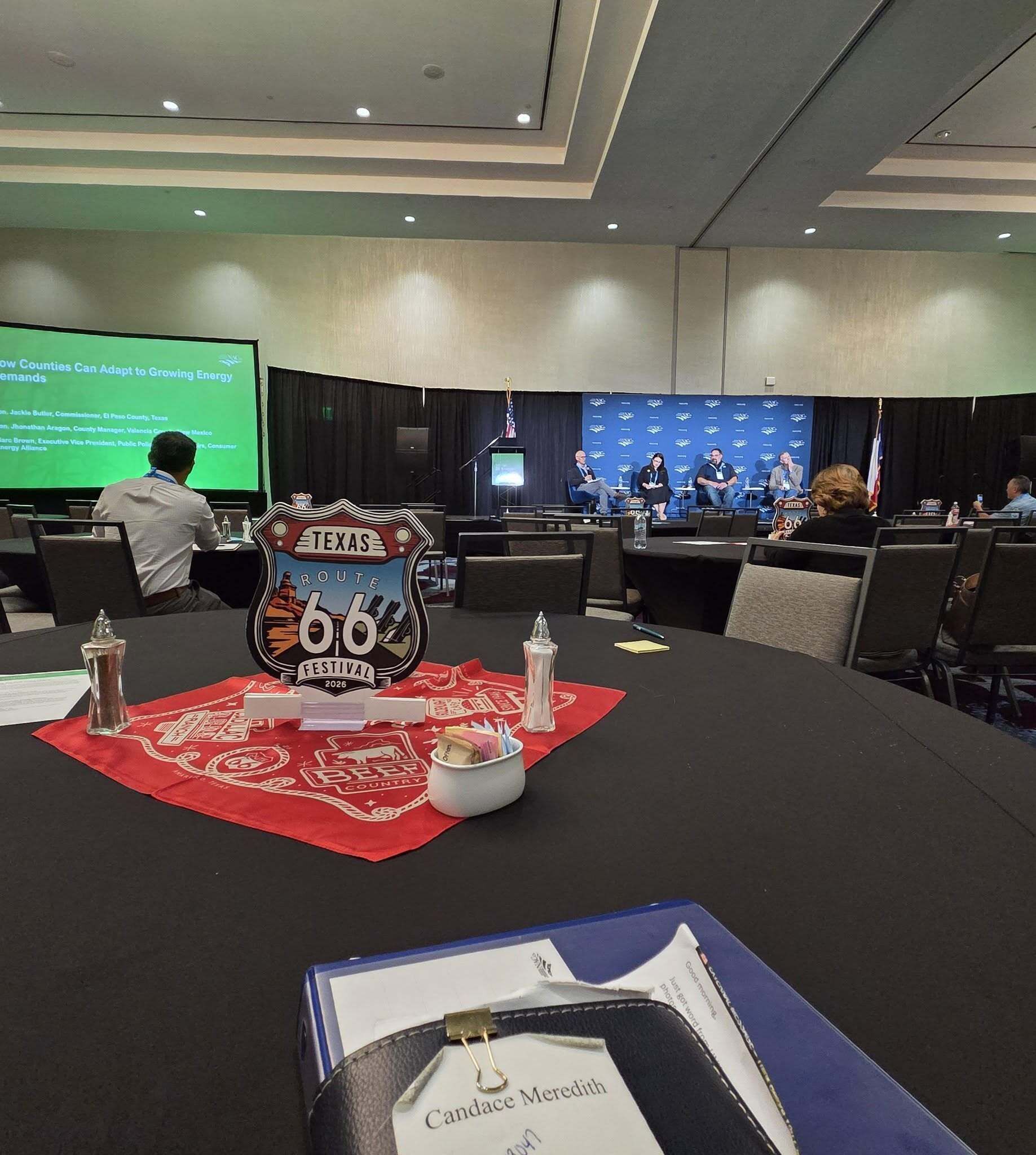
Holt County Supervisor Bill Tielke and I recently had the opportunity to participate in the inaugural NACo Energy Symposium in the Texas Panhandle. The symposium, hosted by NACo’s Rural Action Caucus and Rural Energy Academy, brought county officials together to learn more about energy development, data centers, community engagement, and the role counties may play as new projects are considered.
One of my biggest takeaways was the value of early community and stakeholder engagement. Bringing residents, landowners, developers, utilities, economic development organizations, and other stakeholders into the conversation early can help create a better understanding of a project, provide opportunities to address questions, and help establish a more informed local discussion.
I also came away thinking about the importance of county preparedness. Even if a county is not currently seeing significant development activity, it can be helpful to consider these issues before a proposal is submitted. Thoughtful comprehensive plans and well-studied regulations can provide greater clarity for county officials, residents, and developers and help establish expectations for the local review process.
Not every development will be the right fit for every community, and counties benefit from having clear standards and a thoughtful process for evaluating both opportunities and potential impacts.
These themes were reflected in symposium discussions focused on gathering meaningful public input, conducting productive hearings, and incorporating community perspectives into energy and hyperscale development decisions.
Another valuable experience was touring a large hyperscale data center development underway in Armstrong County. The tour provided a firsthand look at the scale of these projects and the intersection of land use, energy, and technology infrastructure.
Seeing the site helped put many of the surrounding considerations into perspective. Development at this scale may involve housing for construction workers, parking and transportation, on-site medical services, equipment and machinery needs, road infrastructure capable of handling heavy loads, emergency services, and a variety of other community and logistical considerations.
There can be significant economic opportunities associated with large-scale energy and data center development, but the symposium reinforced the value of understanding the full picture. Early conversations, thoughtful planning, and clear local processes can help counties evaluate those opportunities in a way that reflects the needs and priorities of their communities.
For me, the symposium was a helpful reminder that counties do not need to have all the answers in advance. But beginning the conversation, learning from other communities, and considering local priorities before a project arrives can put county officials in a much better position to make informed decisions when opportunities arise.


