





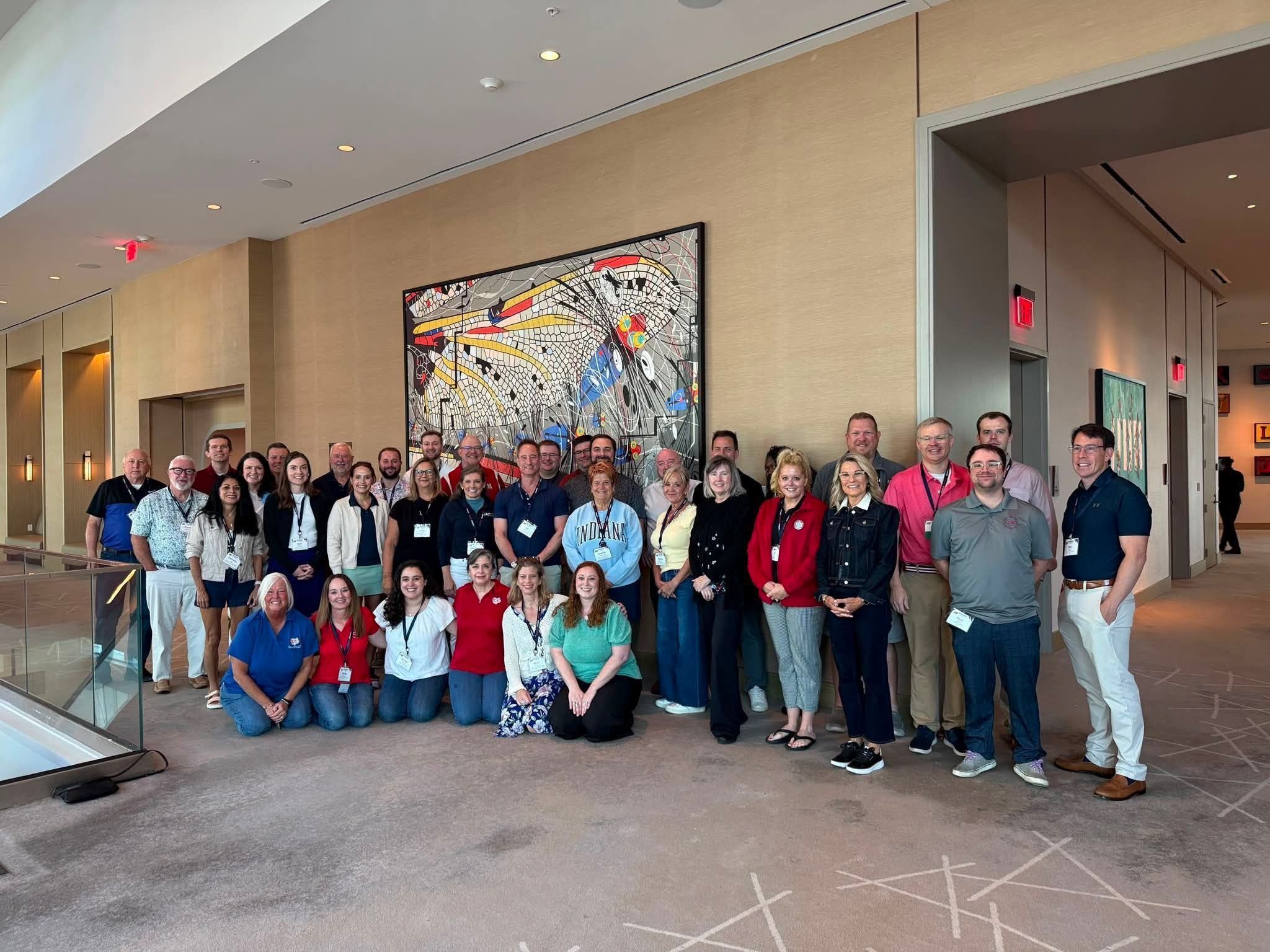
Jon Cannon and I recently traveled to Columbus, Ohio, for the 2026 Midwest State Association Staff Retreat. The gathering brought association professionals together to compare ideas, learn from one another, and explore how counties can respond to fast-moving challenges with confidence.
The retreat covered a wide range of topics—from tourism and rapid growth to public services, communications and artificial intelligence. Three themes stood out to me: AI must be tied to real organizational priorities, people and governance matter as much as technology, and trusted communication begins with a thoughtful internal filter.
The generative AI session asked us to move beyond experimentation and focus on practical value for our association and local government. AI can help counties and associations support research and training, streamline routine workflows, and translate complex information into plain language, but successful adoption is not simply a technology project. It requires clear organizational priorities, role-based workforce training, human review, governance guardrails, strong data and security practices, and a willingness to begin with measurable use cases. The session also highlighted the need for organizations to create room for responsible experimentation, recognize that data quality and data rights shape results, avoid one-size-fits-all solutions, and make investments that build readiness while the technology continues to evolve.
The communication session, “Trust Over Noise: Communicating Through Controversy with Confidence,” offered a timely reminder: in a charged environment, speed and volume do not automatically create clarity. Trust is built when communication is purposeful, grounded, and useful. A practical takeaway is to pause before communicating a decision by running your message through an internal filter by asking yourself: Is it legal? Is it ethical? Is it evidence-based? Does it align with our values? Does it pass the 5-year strategy test?
For associations and local governments, that discipline matters. We communicate in environments where people may arrive with different facts, experiences, and expectations. We cannot control every reaction, but we can be clear about our purpose, listen carefully, communicate what we know, and avoid filling uncertainty with speculation.
The retreat gave us an opportunity to step back and consider how we lead through change. Whether the issue is AI, growth, or public service engagement, the work comes back to the same fundamentals: connect new ideas to real needs, equip people to succeed, put sensible guardrails in place, and communicate in ways that earn trust. Jon and I returned with useful ideas, new questions, and a renewed appreciation for the power of associations working together across the Midwest. I look forward to continuing these conversations and sharing resources that can help local governments turn emerging challenges into practical opportunities.